How to make money sports betting: what actually works in 2026
Can you make money sports betting? Yes, but not the way most people try. Here is what profitable bettors actually do differently.
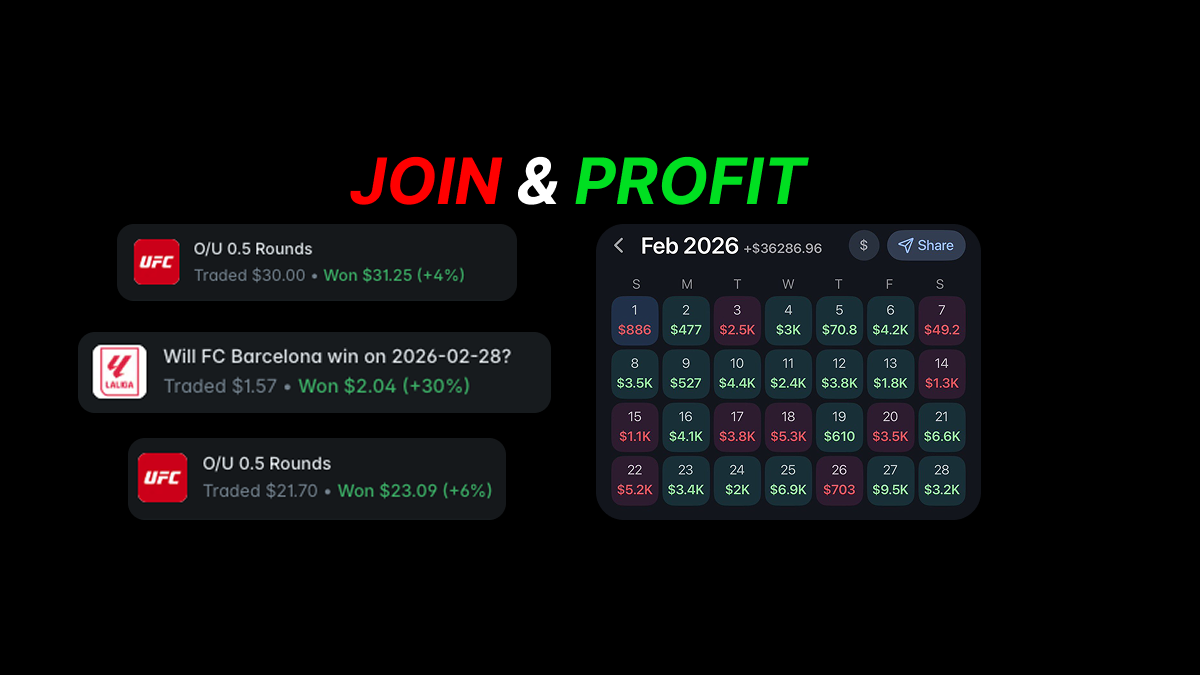
You can make money from sports betting. I do it consistently. But almost everything sold to you about how to do it is wrong, and the gap between what works and what people think works is massive.
The approach that does not work
Picking winners. Following tipsters. Betting accumulators. Trusting your knowledge of a sport to give you an edge over a sportsbook that employs a hundred analysts and processes millions of data points per day.
None of it works long-term. Not because you are bad at sport. Because of the vig — the margin built into every price a bookmaker offers. The vig means that even a coin flip bet loses money on average. Your sports knowledge does not overcome a structural mathematical disadvantage baked into the price of every bet.
The sportsbook does not need to predict outcomes better than you. They just need to price their margin correctly, which they do.
What actually works: finding mispriced odds
Profitable bettors do not try to predict outcomes better than the market. They find situations where the market has mispriced the probability of an outcome and bet those situations before the price corrects.
This is value betting. And it is the foundation of everything that works long-term in this space.
I make £300-600 per day from betting. I do not watch games. I do not care which team wins. I care about one number: the expected value of each bet. If the EV is positive, I bet it. I let volume and maths do the rest.
There are three practical methods for doing this, each suited to a different bankroll level and risk tolerance.
Method 1: matched betting (start here)
Matched betting exploits free bet promotions from bookmakers to generate guaranteed profit. You place a back bet at the bookmaker using their free bet offer and a lay bet on a betting exchange to cover the other outcome. The free bet value is released as cash profit regardless of the result.
Most UK and European markets have enough active promotions to generate £500-1,000+ in your first month from welcome offers alone. Zero sports knowledge required. Minimal risk if done correctly.
This is the right starting point if your bankroll is under £500. Use BetHero's promo calculator to find and calculate the best current offers.
Matched betting does not last forever — you run out of welcome offers. It is a bankroll builder, not a long-term strategy. Move to arbitrage once you have extracted the main welcome bonuses.
Method 2: arbitrage betting (grow your bankroll)
Arbitrage betting means placing bets on all outcomes of an event across different bookmakers to guarantee a profit regardless of the result. Different books price the same event differently. When both sides of a market are above the break-even price simultaneously, you bet both and lock in the difference.
Profit margins per bet are small — typically 1-4%. Volume and bankroll size determine income. A £5,000 bankroll placing 10 arbs per day at an average 2% margin generates roughly £100 per day in expected profit.
The practical challenge: bookmakers limit accounts that consistently take value. Expect to get restricted at most soft bookmakers within weeks to a few months of heavy arbing. This is normal. The strategy is to build your bankroll with arbitrage before accounts get limited, then transition to value betting. Track everything from day one using ArbTracker.pro.
Method 3: value betting (the long game)
Value betting is placing single bets where the odds are higher than the true probability suggests. Higher variance than arbing — you will lose individual bets and sometimes individual months. Higher long-term returns because you are not capped by the small margins of arbing.
This is positive EV betting in its purest form. You need a tool that compares soft bookmaker odds against the sharp market consensus in real time. BetHero does this for 230+ European bookmakers. You place every bet the scanner flags above your EV threshold, size stakes correctly using Kelly criterion, and track everything.
The maths guarantees profit over a large enough sample. The practical challenge is surviving the variance long enough to let the edge show.
The bankroll and staking reality
Most people who fail at profitable betting do not fail because their strategy was wrong. They fail because they staked too large during a downswing and ran out of bankroll before the edge could materialise.
Correct bankroll management is not optional. Bet 1-3% of your total bankroll per bet maximum. Use fractional Kelly staking rather than full Kelly to reduce variance. Never chase losses with larger stakes.
With a £1,000 starting bankroll and correct staking, you are not making significant money in month one. You are building the foundation. The compounding starts to matter around month three to six.
The honest timeline
Month 1-2: matched betting. Extract welcome bonuses. Build to £1,000-2,000 bankroll. Learn the mechanics.
Month 3-6: arbitrage. Grow the bankroll. Open bookmaker accounts systematically. Track every bet. Expect some accounts to start limiting.
Month 6+: value betting. Full transition. Place 15-25 value bets per day. Let volume and positive EV do the work.
None of this is passive income in month one. Anyone selling it as such is lying. It is a skill that pays well once developed and a mathematical edge that compounds once your bankroll is large enough.
Bottom line
Making money from sports betting is real. It requires the right methods, correct bankroll management, and enough patience to let the mathematical edge work over volume.
The free Telegram group is where I post my actual bets daily with full reasoning. See the operation in practice before committing to anything.