What is value betting? The complete guide for 2026
How are the profitable 1% of Sportsbettors making money while 99% of bettors lose? This guide answers this question by explaining the most profitable sports betting method...
Most sports bettors ask the wrong question. They ask "who's going to win?" A value bettor asks something completely different: "Is this line mispriced?"
That one reframe separates the 1% who make consistent money from the 99% who fund their losses. This guide explains exactly what value betting is, how it works mathematically, and how to start doing it.
Value betting definition: what it actually means
A value bet is any bet where the odds offered by a bookmaker are higher than the true probability of that outcome occurring.
Example. A football team has a 50% chance of winning a match. Fair decimal odds for a 50% probability are 2.00. If a bookmaker is offering 2.20 on that team, you have a value bet. The odds imply roughly 45% probability, but the true probability is 50%. That 5% gap is your edge.
Bet that edge consistently across hundreds of bets and the math guarantees profit over time. Not on every bet. Over volume.
Why value exists in the first place
Sportsbooks pour serious money into pricing markets accurately. But they are not perfect, and they cannot be. Here is why value keeps appearing:
Sharp markets move fast. When a major bookmaker like Pinnacle adjusts a line based on sharp money, softer bookmakers are slower to react. In the window between the sharp book moving and the soft book catching up, a value bet exists.
Soft bookmakers also prioritise coverage over accuracy. A major European sportsbook might offer odds on 50,000 events per week. Their pricing on a Norwegian third-division match at 10pm on a Tuesday is going to be less precise than their pricing on the Champions League final. The obscure markets are where the most value lives.
This is not a loophole or a grey area. You are simply finding bets where the price is wrong and betting them before the market corrects. It is what professional traders do in financial markets. It is what poker players do every hand.
The maths behind value betting
Expected value is the core calculation. The formula:
EV = (probability of winning x profit) - (probability of losing x stake)
Using the example above with 2.20 odds and a true win probability of 50%:
EV = (0.50 x 1.20) - (0.50 x 1.00) = 0.60 - 0.50 = +0.10
For every £1 staked, you expect to make £0.10 on average. That is a 10% edge. Across 1,000 bets at £100 each, that is £10,000 in expected profit regardless of which individual bets win or lose.
This is why positive expected value betting is the only mathematically sound long-term strategy in sports betting. Everything else is gambling. This is not.
How value bettors find mispriced lines
The practical process comes down to one thing: comparing your soft bookmaker's odds against a sharp reference market.
Pinnacle is the gold standard reference. They accept sharp bettors, move lines quickly based on smart money, and carry the lowest margins in the industry. If Pinnacle has a team at 1.85 and your soft bookmaker has them at 2.10, that gap is significant. You have a value bet.
Doing this manually is possible but slow. By the time you check odds across 20 bookmakers on hundreds of events, most of the value has been priced out. This is why value betting software exists. Tools like BetHero scan 230+ bookmakers in real time and surface every instance where a soft book is significantly above the sharp consensus price. What would take you four hours of manual checking takes the software four seconds.
Value betting vs arbitrage betting: what is the difference
People confuse these two strategies constantly. They are related but not the same.
Arbitrage betting means placing bets on all outcomes of an event across different bookmakers to guarantee a profit regardless of the result. Zero variance. Guaranteed return. Usually 1-4% per bet.
Value betting means placing one bet where you have an edge. You will still lose individual bets. Over volume, the positive EV means you profit. Higher variance than arbing but significantly higher returns. Most serious bettors start with arbitrage to build their bankroll, then graduate to value betting where the real money is.
I used arbitrage for eight months to grow my bankroll before switching to pure value betting. Now I place 15-25 value bets per day without watching a single game or caring about the sport.
How to start value betting today
You need three things: accounts at multiple soft bookmakers, a sharp reference market, and a way to find discrepancies fast.
Start by opening accounts at 8-10 bookmakers. Focus on soft books that are slow to move lines. Bet365, William Hill, Unibet, Betsson, and similar European operators are the standard starting point.
Then get a scanner. BetHero covers over 230 bookmakers across 197 countries and is the best price-to-performance option for European bettors. It shows you the exact bet, the exact bookmaker, the recommended stake based on your bankroll, and the EV percentage in real time.
Track everything from day one. You cannot measure your edge without data. Use ArbTracker.pro or a spreadsheet at minimum. After 500 bets you will have a clear picture of your actual ROI and which bookmakers still have you unsettled.
The honest reality of value betting
Variance is brutal in the short term. You can have a losing month while doing everything correctly. This is the part nobody tells you when they sell the strategy.
A 5% edge means nothing over 50 bets. Over 500 bets it means a lot. Over 5,000 bets it is almost certain to show. The bettors who fail at value betting are not bad at finding value. They quit during a normal variance downswing because they had no mental model for how statistical edges work in practice.
Read about bankroll management before you place a single value bet. Specifically Kelly criterion staking. Betting too large during a downswing is how people blow their bankroll on a strategy that was actually working.
Bottom line
Value betting is the only strategy in sports betting with a genuine mathematical edge on your side. It requires no knowledge of sports, no gut feeling, no tips from anyone. Just odds, probability, and volume.
The tools to do it properly exist and are affordable. The process is learnable in a weekend. The results take months of consistent execution to materialise.
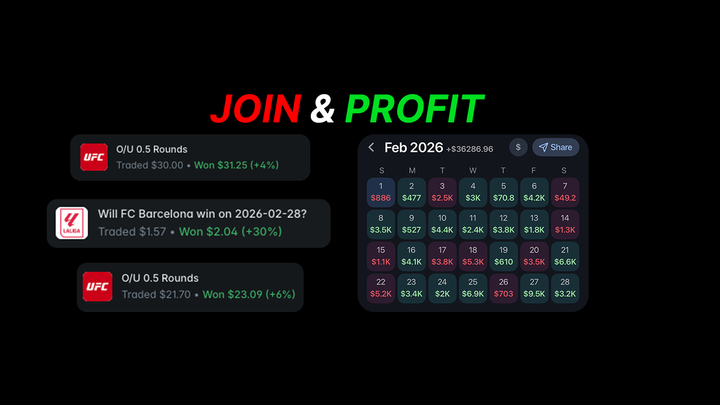
If you want to see what this looks like in practice, join the free Telegram group where I post every bet I place with full reasoning. No picks. Just the process, public.